
Euro pauses near 12-week high against Yen despite upbeat Eurozone PMI

EUR/JPY consolidates modest losses on Friday as fresh data from Japan and the Eurozone fails to generate a strong market response. At the time of writing, the cross trades around 186.30 after reaching a 12-week high of 186.67 on Thursday.
The preliminary Eurozone HCOB Composite Purchasing Managers’ Index (PMI) rose to a five-month high of 51.9 in July, beating the market forecast of 50.2 and improving from 50.0 in June. The Services PMI climbed to a five-month high of 51.6 from 49.4, while the Manufacturing PMI increased to a three-month high of 52.0 from 51.4.
The stronger PMI figures reinforce signs of economic resilience despite heightened tensions in the Middle East, supporting expectations that the European Central Bank (ECB) can maintain a restrictive policy stance.
On Thursday, the ECB kept all three key interest rates unchanged after raising them by 25 basis points in June. The central bank reiterated that future policy decisions will depend on its assessment of the inflation outlook and the risks surrounding it.
Traders have fully priced in another rate increase at the September meeting. ECB policymaker Gediminas Šimkus said on Friday that “inflation is seen higher than target for a long time” and that he still sees “the probability of a rate hike higher than a hold.” However, he added that policymakers “do not see second-round effects of higher inflation” and will have additional inflation data by September.
Meanwhile, the Japanese Yen remains broadly weak, keeping traders to the risk of intervention as USD/JPY stays pinned at a 40-year high. Elevated Oil prices and Japan’s relatively low interest rates continue to weigh on the currency.
Data released earlier on Friday showed that Japan’s headline National Consumer Price Index (CPI) rose 1.7% year-over-year in June, accelerating from 1.5% in May.
According to Reuters, citing three sources, the BoJ is expected to keep rates unchanged next week while warning that inflation could exceed its 2% target, although policymakers believe the threat of an immediate Oil-driven inflation shock has eased since April.
Disclaimer: The content of this article solely reflects the author's opinion and does not represent the platform in any capacity. This article is not intended to serve as a reference for making investment decisions.
You may also like
Bitcoin, ether rise as inflation data does little to alter Fed interest rate outlook
XRP trades at $1.36 as daily active addresses fall 90%, technical risks rise
Bitcoin faces $77,100 to $81,700 supply barrier as ETFs see $462 million weekly outflow
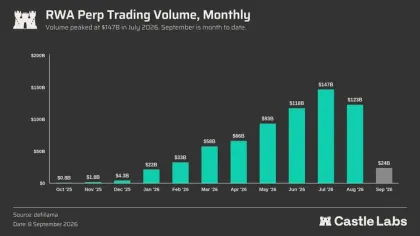
RWA Perpetual Trading Surges Above $120B
Crypto prices
More


