
Lisa Su Firmly Bullish on AI Computing Power

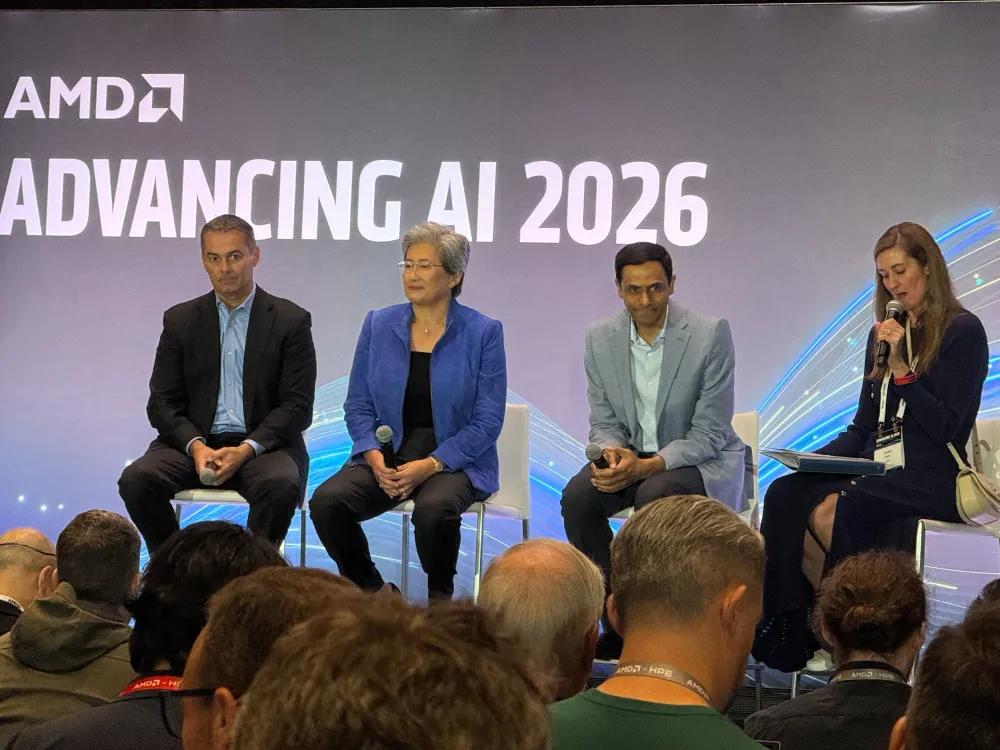
Advancing AI is AMD's annual event focused on the AI computing ecosystem. On July 24, 2026 (UTC+8), AMD centrally launched the Helios rack-level AI platform, the 6th Generation EPYC "Venice" server CPU, Instinct MI430X and MI350P, ROCm.AI, as well as the “Gorgon Halo” and Kria AI Robotics developer platforms targeting local Agents and robotics. The star of the event was Helios, powered by the MI455X as the computing core, officially marking AMD's entry into the AI factory competition with a complete system consisting of GPU, CPU, networking, and software.
In the Keynote, Lisa Su summarized AMD’s strategy in three points: computing leadership, open platforms, and “making AI ubiquitous”. Behind these strategies is AMD’s clear assessment of the changes in the AI industry: training will still continue to expand, but the focus of compute consumption is rapidly shifting toward inference; Agent now extends a single model call into continuous inference, tool invocation, code execution, and data access. Thus, AI infrastructure issues have evolved from a "GPU problem" into a systematic engineering challenge involving CPU, networking, software, power supply, and data centers.
Lisa Su predicts that by 2026, about 60% of global AI compute will be used for inference, stressing that Agents require "a large number of GPUs for inference" as well as "a large number of CPUs to orchestrate each step".
On July 24 (UTC+8), at the AMD Advancing AI 2026 event, AMD Chair & CEO Dr. Lisa Su, Senior Vice President of AMD Artificial Intelligence Business Unit Vamsi Boppana, and Senior Vice President and General Manager of Data Center and Enterprise AI Business, Dan McNamara, held a nearly 30-minute session with global media, including Tencent Technology. Compared with the Keynote’s product launches, this conversation delved into AMD’s core questions: whether AI demand will continue to grow rapidly, whether Helios can be delivered on schedule, how AMD is catching up with NVIDIA, and whether open ecosystems are truly a viable business route.
Lisa Su further elaborated on AMD's view on demand: "The more useful AI is, the more people want to use it." In her view, enterprise investment in AI has shifted from initial cost reduction to more direct value creation such as product development and business growth. Therefore, even if companies start controlling token budgets, the long-term trend of growing compute demand will not change.
Facing the direct question "Is AMD still following NVIDIA," Lisa Su did not shy away. She stated that AMD has chosen a different path: covering different workloads with chiplet and product portfolio architectures, and connecting clients and partners through an open ecosystem. She emphasized that AMD is not satisfied with natural market growth, but "expects to grow faster than market average in every segment we participate in"; the move from MI450 to MI500 is "not a minor upgrade, but another significant leap."
This competitive approach is also reflected in the way Helios was developed. Lisa Su said that Helios was not independently completed by AMD and then handed to clients, but co-designed with leading companies such as OpenAI, Meta, and Anthropic. From chips and software to data centers and supply chains, customers enter the product definition process earlier. She referred to this collaboration as Helios’ crucial "secret weapon" for on-schedule mass production.
Q: As companies begin to control token budgets, why does AMD still believe the AI market will continue to grow rapidly?
Lisa Su: That’s a very good question.
First, let me take a step back: predicting the market is perhaps one of the most difficult things to do, as forecasts are unlikely to be entirely accurate.
But what we do know is that we’ve spent a lot of time talking to customers, trying to understand the fundamental changes happening at the workload level. What we’re seeing now is very strong compute demand. This is true for GPUs and accelerators, but the rate of change in CPUs is actually even more aggressive.
As for why we believe this trend will continue, you’ve heard today from OpenAI, Meta, and other large clients. We have to plan years ahead to prepare chips, power, data centers, and the whole supply chain. So, we’re now collaborating with customers more closely than ever before.
AI is a typical example: the more useful it is, the more people want to use it. Of course, there will be continuous optimization.
Dan previously discussed what we've seen working with enterprise customers. But overall, the broad trend of AI adoption is continuing upward. We see AI play an ever bigger role across key areas of product development and other domains where enterprises create value.
The value that AI brings already well exceeds cost reduction. Lowering costs may have been enterprises' initial reason to deploy AI, but now it’s more and more used to generate real enterprise value.
So, we’re very confident in the demand curve.
Meanwhile, people are also realizing that it's no longer a single chip issue. It requires a complete family of chips, product portfolio, and hardware systems. This is an unique insight that AMD has always adhered to.
Q: How complex is Helios? With Helios scheduled to deploy in the second half of this year, how does AMD define this deployment? Why are you confident it will be completed on time?
Lisa Su: First, I want to be very clear about this. From the hardware shown on stage, you should have seen that Helios is indeed very impressive.
It's an incredible engineering achievement involving powerful compute, power supply, system integration, density, and many other aspects.
But you have to remember, we've been preparing for this moment for years.
This includes our internally built capabilities, such as ROCm and platform software; the expertise of our networking team; as well as our acquisitions of Pensando and ZT Systems and their integration.
I hope what you experienced today as a "secret weapon" is that we are in complete synchronization with our partners. In other words, AMD doesn’t finish product development independently and then hand it over to partners. We develop together.
OpenAI is co-developing with us, Meta is co-developing with us. You’ve also heard from Anthropic co-founder Tom Brown. That’s why we’re very confident in our production ramp-up.
"Volume production" means we’re ready to ship. We will start shipping at the end of Q3 (UTC+8), and scale up throughout Q4 and the first half of next year.
The first products are clearly planned for which data centers they will enter. We are also closely collaborating with ODM partners. Unlike previous products, Helios is fully aligned at every stage of the supply chain. This is a key reason for our confidence.
I feel very good about the progress of Helios.
Q: Today AMD announced new data center racks, a partnership with Cerebras, and software advances. However, from the timeline, these products still seem to be following NVIDIA. Is AMD’s strategy not to compete for first place, but to simply gain a reasonable market share in a market large enough for several players, even if being number two?
Lisa Su: We did release a lot of products today. But seriously, we think we are paving the way for what AI computing will truly need in the future. GPUs of course are critical, and we are very confident in our GPU roadmap.
As I previewed today, moving from MI450 to MI500 isn’t a minor upgrade but another significant leap.
We believe AMD will lead in the scale-up compute expansion space. This is a very important judgment, but that’s the direction we see right now.
We have chosen a different path. Over the past ten years, especially the last five, we've invested in chiplet and portfolio architectures.
Take EPYC as an example. Everyone now finds CPUs interesting, but we've been preparing for this moment for years.
Mark Papermaster and his team have always been thinking about how to build an ecosystem that allows different workloads to use the most suitable chips. This philosophy runs through our overall roadmap.
So, we are very confident in our current position. It’s a massive market. AMD believes that by 2030, the total market opportunity we face will reach $2 trillion, an enormous number.
But we don’t just want to share in market growth. We expect that in every segment we participate in, AMD’s growth will outpace the industry average.
AMD will compete in its own way. Our approach includes leading technology, open ecosystem, and optimal compute selection for different workloads. This requires both breadth and depth.
Vamsi Boppana: Lisa has already explained it well.
There are always new segments emerging in the market. We need to stay focused and execute the priorities with discipline, otherwise it’s easy to get distracted by many directions.
But at a certain point, we will choose a segment and state clearly that we believe we will achieve undisputed leadership there. We are confident in this.
Lisa Su: At least today, we can definitively say that AMD has undisputed leadership in CPUs.
Q: In 2025, AMD reached a chip procurement and deployment agreement with OpenAI, granting up to about 10% equity via warrants. Why did you use a different deal structure with Anthropic this time? What market changes have occurred over the past year?
Also, how is the OpenAI deployment progressing? According to the previous plan, deployment should start in the second half of 2026.
Lisa Su: First, we are very happy, honored, and excited to work with some of the world’s most important frontier AI companies, including OpenAI, Anthropic, Meta, and others.
Here's how I’d put it: every deal is different.
Our relationship with OpenAI is very special. You probably picked that up from Sachin and Philippe’s remarks today.
We started working with OpenAI as early as the MI300. Both sides worked collaboratively on roadmaps and jointly advanced software. Candidly, OpenAI has made a significant commitment to AMD, including deployment up to 6GW.
Previously, we stated that the first 1GW would start deploying in the second half of 2026, continuing into 2027. I can confirm the plan is completely on track.
Speaking overall rather than about a single client, demand for the MI450 series has already exceeded our original projections.
Clients have seen the actual hardware performance and like the results. We're thus increasing production and supply capacity for the coming quarters.
As for Anthropic, as I mentioned on stage, AMD has been watching Anthropic for years—even when Dario and Tom first founded Anthropic, we paid close attention.
But these collaborations need the right timing. For any company, adopting a new chip platform requires tremendous engineering commitment. So we understand that when Anthropic puts people, resources, capital, and time into the AMD platform, it’s a major decision.
No deal is the same. The Anthropic agreement centers mainly on MI450, with up to 2GW capacity. The first 1GW is planned to deploy in the first half of 2027 (UTC+8). We’re also discussing longer-term planning with Anthropic.
So, the two deals just use different structures.
Q: How exactly are Anthropic and AMD co-developing? Does it involve data center resources?
Lisa Su: Of course. The AMD-Anthropic relationship is firstly based on providing massive compute to underpin Anthropic's continued scale-up.
You can expect Anthropic to use AMD's GPUs and CPUs through various channels, including the cloud and possibly in-house data centers.
We are working closely with Anthropic to support these various deployment forms. The partnership is far more than just buying chips. Both sides jointly accomplish system deployment and bring-up, and also collaborate on running Claude on AMD platforms.
From a software standpoint, Claude and Codex are currently among the most powerful and popular platforms.
We hope developers can leverage these platforms to develop efficiently on AMD hardware. This is also an important part of the collaboration.
On the data center side, we are actively ensuring there is enough deployment capacity in the market. This is indeed a key AMD focus area, but it is not just for Anthropic; it covers the overall needs of systems and ecosystems.
Q: The partnership isn’t surprising, but considering AMD’s own chip design strength and experience, will you continue to work with Cerebras long-term, or is this a transitional arrangement, with AMD eventually developing a similar product in-house?
Lisa Su: I don’t view any partnership as a temporary stopgap. We don't collaborate "as a matter of expedience" from the outset.
We are working with Cerebras because they have very interesting technology. There are many different paths to accelerating specific workloads. Cerebras’ technology is one of them, and collaborates well with Helios.
When AMD talks about an open ecosystem, it means we will work with multiple companies with valuable technologies as long as those fit our long-term vision.
Long term, I think we will see more decoupling and separation of workloads. The pace will partly depend on the cost structure and price point of the different solutions.
But for AMD itself, we have a very strong roadmap with MI400, MI500, and MI600. Meanwhile, we have the ability to mix and match different compute technologies.
We’re very excited to work with Cerebras. You can expect AMD to keep driving further decoupling and targeted acceleration of workloads.
Vamsi Boppana: I’ll quickly add one point. You don’t have to look far ahead; in AMD’s existing portfolio there are already many small AI engines capable of ultra-low-latency, ultra-low-power, real-time response tasks.
Check our embedded portfolio and applications in automotive, medical devices, etc. The key idea is, AMD believes AI will tightly integrate into every kind of compute, each scenario with different characteristics. We will provide tailored solutions for those scenarios.
Disclaimer: The content of this article solely reflects the author's opinion and does not represent the platform in any capacity. This article is not intended to serve as a reference for making investment decisions.
You may also like
Bitcoin, ether rise as inflation data does little to alter Fed interest rate outlook
XRP trades at $1.36 as daily active addresses fall 90%, technical risks rise
Bitcoin faces $77,100 to $81,700 supply barrier as ETFs see $462 million weekly outflow
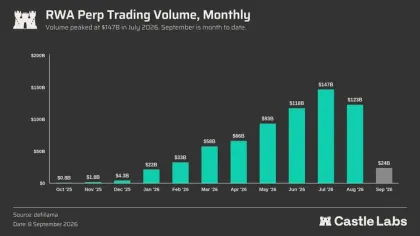
RWA Perpetual Trading Surges Above $120B
Crypto prices
More


