
Goldman Sachs Bullish on Gold Reaching $4900 by Year-End: Derivatives Hedging May Serve as a "Amplifier", Gold Prices Could Go Even Higher

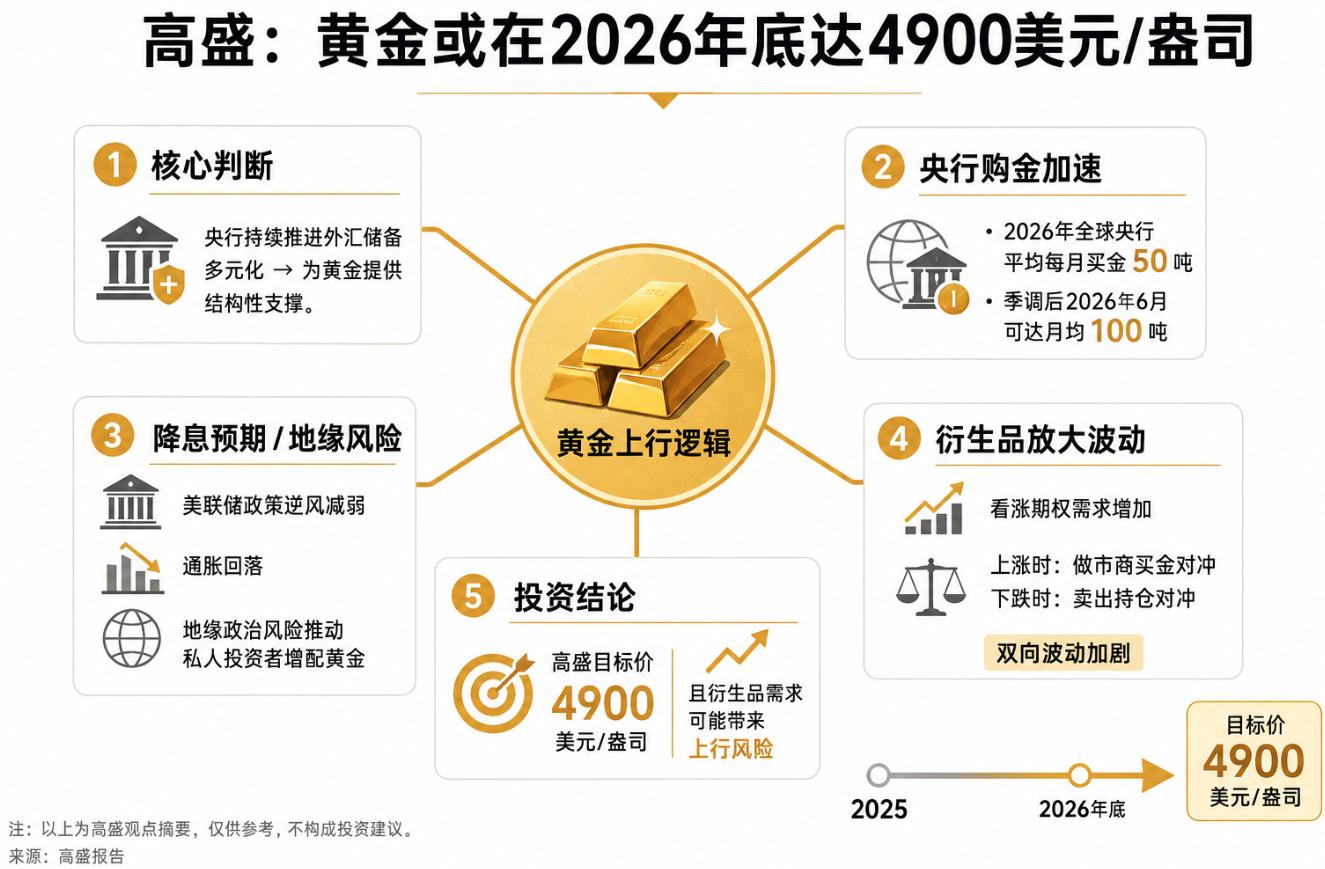
Goldman Sachs Research expects that the central banks' continued push for foreign exchange reserve diversification will continue to provide structural support for gold, with gold prices expected to reach $4,900 per ounce by the end of 2026.
Lina Thomas and Daan Struyven, analysts at Goldman Sachs Research, stated: “We expect gold to extend its recent rally into the second half of 2026, even as the usage of some gold-linked derivatives continues to rise, which could increase price volatility.”
Central Banks Are Accelerating Gold Purchases
Goldman Sachs sees central bank demand as an important pillar for the long-term rise in gold. The institution believes that the increase in central bank gold holdings is not a short-term phenomenon, but rather a years-long adjustment in reserve structure.
Thomas and Struyven pointed out: “We continue to see the high level of central bank gold accumulation as a multi-year trend, consistent with recent survey evidence—that central banks are diversifying reserves to hedge against geopolitical and financial risks.”
Goldman Sachs expects that, in 2026, central banks globally will purchase an average of 50 tons of gold per month, significantly higher than the pre-2022 average of 17 tons per month.
Goldman Sachs Research’s real-time forecasting model for central bank activity shows that, after three-month seasonal adjustment, sovereign gold purchases will further accelerate to a monthly average of 100 tons in June 2026, up from 66 tons in the prior month.
Expectations for Rate Cuts Also Easing Pressure on Gold
Expectations surrounding Federal Reserve policy have also contributed to the recent revival in gold demand. Goldman Sachs noted that as the market lowers its expectations for Fed rate hikes in 2026, previously subdued gold demand from some investors is recovering.
Goldman Sachs analysts wrote: “We expect headwinds related to the Fed to further diminish, as our economists anticipate that a downward trend in inflation will keep the Fed's rates unchanged this year.”
Goldman Sachs also believes that private investors’ portfolio allocations to gold remain at relatively low levels, meaning that potential allocation demand for gold has not yet been fully unleashed.
Thomas and Struyven stated: “Gold’s share in private investment portfolios is still low, and recent geopolitical developments—including events involving Iran and broader tensions—could accelerate the diversification trend from central banks to private investors, partly because these factors put pressure on expectations for Western fiscal sustainability.”
This means that, if geopolitical risks continue to prompt private investors to adjust their asset allocations, gold demand could expand further and provide additional upside for gold prices beyond Goldman’s current target of $4,900 per ounce by the end of 2026.
Gold Options May Magnify Both Upside and Downside Moves
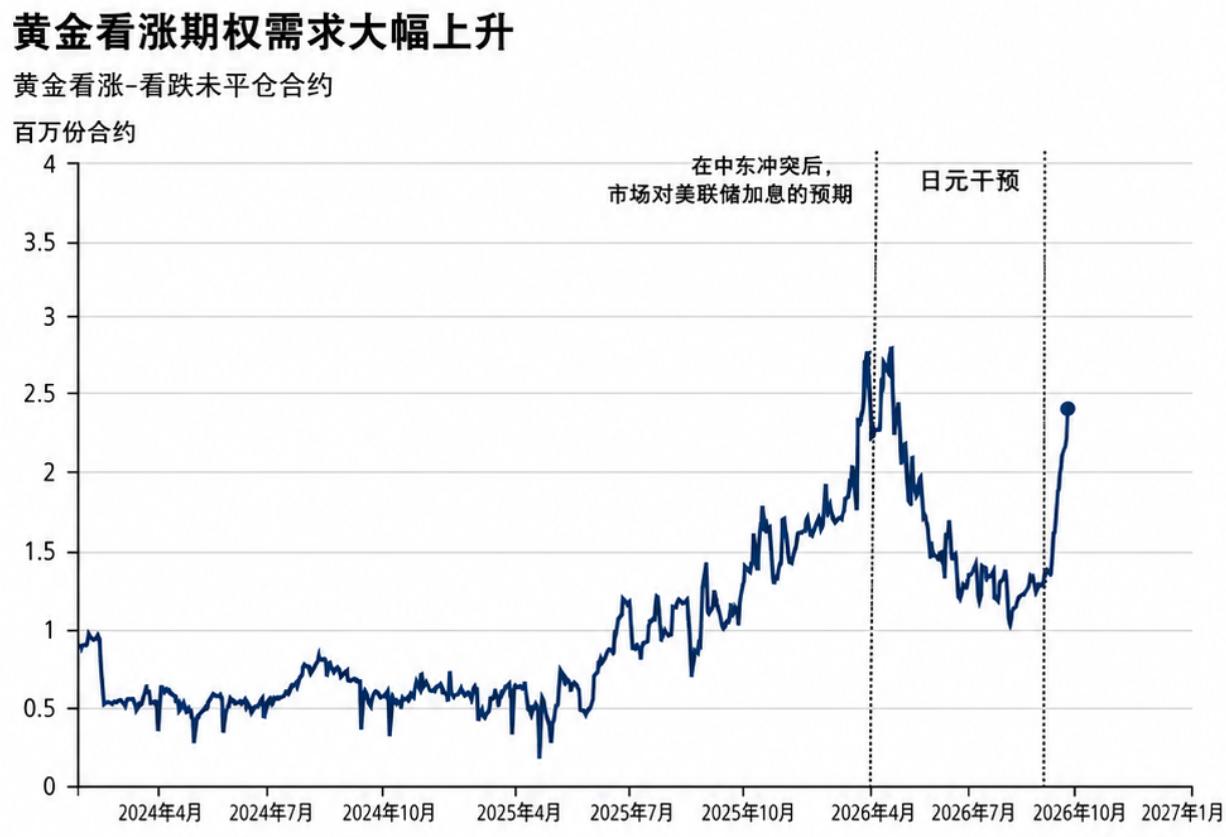
Another change occurring in the gold market comes from derivatives. Goldman Sachs noted that investor demand for gold call options is rising, partly due to a desire to hedge against risk from sweeping changes in government policy impacting investment portfolios.
The hedging mechanics of the options market could further amplify swings in gold prices. When gold continues to climb and nears key strike prices of some call options, market makers who sold these options may need to buy gold to hedge their short exposure.
The Goldman Sachs report points out: “As gold moves higher and approaches key strike prices for some call options, market makers who sold these options are forced to buy gold to hedge their short exposure, thus accelerating the rally.”
The same mechanism can also work on the downside. According to the report: “Conversely, if gold prices decline, market makers may unwind their hedges by selling gold holdings, which could push prices even lower.”
Therefore, derivative demand does not only provide extra buying power for gold; it may also act as an amplifier: hedging-driven buying on the way up can reinforce upward moves, while hedging-driven selling on the way down may further depress prices.
Goldman’s current $4,900 per ounce target does not embed this strong demand for gold derivative hedging. The institution believes that this factor increases the upside risk to its price target, but at the same time means that the gold market will face “greater two-way volatility” in the future.
Disclaimer: The content of this article solely reflects the author's opinion and does not represent the platform in any capacity. This article is not intended to serve as a reference for making investment decisions.
You may also like
Crypto Bitlord says he is 100x more bullish on XRP, calls ATH this cycle “logical”
Solana spot ETFs log 11 consecutive days of net inflows, Bitwise leads with $6.17 million
Hoskinson urges Cardano to finalize key upgrades as ADA falls 41% in 2026
Cardano Price Prediction: TD Sequential Flashes Buy Signal as ADA Eyes Recovery

Crypto prices
More


