
Gold Trading Alert: Bulls and Bears Battle at the 4400 Level; Rate Hike Expectations Pressure Gold Prices—Can Major Countries' Increased Holdings Change the Situation?

Forex Network September 8 Report—— Strong US employment data reinforced expectations for a Federal Reserve rate hike. On Monday, spot gold prices fluctuated near the 4400 mark, closing down slightly by 0.56% at $4,406. Rising oil prices driven by Middle East conflicts and heightened inflation concerns further solidified the logic for rate hikes, putting downward pressure on gold prices. The People's Bank of China's 22 consecutive months of gold accumulation provides long-term support. This week, PPI and CPI data will become key observation points. Gold is finding buying support near $4,400, with obvious resistance above $4,500.
On Monday (September 7), spot gold extended last Friday's decline but also showed a tug-of-war between bulls and bears near the 4400 level. Robust US employment data instantly sharpened the market’s bet on a Fed rate hike this month, sending bond yields higher and putting pressure on the non-yielding asset, gold. Meanwhile, the ongoing escalation of Middle East conflicts is pushing up oil prices and inflation risks, which paradoxically strengthens expectations for more rate hikes. Gold twice found buying support near $4,400—slightly above the 100-day moving average (key support at $4,346). The People’s Bank of China’s 22 consecutive months of gold accumulation has boosted bull confidence, but last week's rally stalled at the 200-day moving average at $4,535, causing hesitance among some bulls. Both sides are fiercely contesting this range.
Investors now need to digest the short-term impact from employment data, wait for this week’s key inflation data, and keep an eye on how Gulf region shipping and energy situations may indirectly impact interest rate outlooks via inflation channels. Gold’s short-term trend is likely to remain dominated by rate expectations, while rising oil prices resulting from Middle East tensions are currently reinforcing the rationale for rate hikes and suppressing gold prices. In early Asian trading on Tuesday (September 8), spot gold edged higher, currently trading near $4,420/oz, up about 0.3%.
Stronger Than Expected Employment Data, Rate Hike Shadow Quickly Engulfs the Gold Market
The US August nonfarm payrolls report released last Friday became the immediate trigger for Monday’s gold price pullback. New jobs reached 162,000, far exceeding market expectations, while the unemployment rate steadied at 4.1%. This data powerfully demonstrates the resilience of the US labor market and quickly shifted market judgment regarding the Fed's policy path. The CME FedWatch tool showed that traders’ odds of a 25 basis point rate hike at the Fed's September 15-16 meeting rose from about 50% before the employment release to around 60%, with some institutions giving a median expectation of nearly 58% to 60%.
Ole Hansen, Head of Commodity Strategy at Saxo Bank, pointed out that gold and silver prices contrasted sharply with energy prices. After a strong employment report pushed yields higher and reinforced September rate hike bets, gold and silver extended their losses. On Monday, spot gold closed down 0.56% at $4,406.23 per ounce, while December US gold futures fell 0.5% to $4,456.40. Due to the US holiday, trading volume was relatively thin, but this did not mask the fact that prices found clear buying support twice below $4,400.
Hansen emphasized that current gold prices remain well above the important support near $4,320, while persistent selling pressure exists above $4,500. This "support below, resistance above" pattern shows the market has not turned outright bearish, and instead, money continues to buy on dips at key levels even as rate hike expectations are digested.
UBS's change in attitude is more indicative. The bank had previously predicted no policy changes for the entirety of 2026, but after the employment data, quickly revised forecasts to expect 25 basis point rate hikes by the Fed in both September and December. UBS Wealth Management noted in a report that the hawkish policy signals—especially Fed Chair Waller's speech at Jackson Hole—combined with supply bottleneck-related inflation risks and a strong August job market, were enough to alter their initial stance.
Institutions such as Citi and Macquarie also raised rate hike expectations based on the latest employment data. Rising rates mean higher opportunity costs for holding gold, which inherently dampens the appeal of a non-yielding asset. While gold is traditionally viewed as an inflation hedge, its attractiveness is often temporarily weakened in environments of rising real yields.
Middle East Conflicts Push Oil Prices Higher and Intensify Inflation Worries, Rate Hike Bets Suppress Gold Despite Safe Haven Demand
While interest rate expectations dominate sentiment in the gold market, the heating up of the Middle East situation is, through oil and inflation channels, further reinforcing rather than counteracting rate hike logic, thus putting net downward pressure on gold. Over the weekend, US-Iran attacks on shipping targets pushed oil prices to near six-week highs, triggering renewed inflation concerns in the market. Iran’s Parliament Speaker Mohammad Bagher Ghalibaf clearly warned that attacks on Iranian assets will be met with retaliation, and pointed out that the entire Gulf region’s energy infrastructure—including US oil and gas interests—remains vulnerable. Senior Iranian security official Mohsen Rezaee stated that Tehran would soon announce a new restriction zone in the Persian Gulf, unveiling new shipping corridors through the Strait of Hormuz. Any ship entering this area will be added to Iran’s sanctions list, and Iran will only guarantee keeping the Hormuz Strait open if the US stops its sabotage, threats, and attacks against Iran.
The Strait of Hormuz is a critical artery for global oil and gas supply, accounting for about one-fifth of the world’s oil and LNG shipments before the war. Shipping data shows that over the past 10 days, an average of only 10 merchant ships passed through the strait per day, the lowest since May. Over the weekend, the US military struck three Iranian oil tankers, one near Iran’s main oil export hub Kharg Island; previously, the Iranian Revolutionary Guard had launched attacks on US warships. The conflict also affected other Gulf oil exporters such as the UAE, whose tankers were similarly attacked in Hormuz. The UAE has started establishing alternative routes for energy exports and trade to avoid these activities becoming "hostages" to war. Meanwhile, Israeli airstrikes in southern Lebanon killed at least 12 people, further heightening regional tensions. Although Israel and Hezbollah reached a ceasefire in June, the latest attack has rekindled market worries about resumed military actions. Tehran insists that any lasting agreement with Washington must include ending Israeli attacks on Lebanon.
Persistently rising energy prices directly lift inflation expectations, reinforcing rather than offsetting the Fed’s rate hike path. Higher oil prices mean inflation stickiness may be more pronounced, supporting market bets for the Fed to maintain or even accelerate tightening, pushing real rates higher and increasing the opportunity cost of holding gold. Although gold naturally plays a safe haven role amid geopolitical turmoil, in the current environment inflationary concerns and heightened rate hike expectations from rising oil prices have overwhelmed pure safe haven buying—now dominating the forces suppressing gold prices. Last Friday, Trump even stated that if the Fed does not cut rates as he demands, the US will halt trade with countries running trade surpluses with America. This kind of political pressure does add uncertainty to monetary policy but cannot offset the support for rate expectations from oil and inflation. As a result, the market tends to see Middle East conflicts as catalysts for more hawkish logic, rather than simply safe haven triggers for gold.
PBOC Adds Gold for 22 Consecutive Months, Long-Term Demand Logic Remains Firm
While Western markets focus on rates and geopolitics, official gold purchases from the East are giving gold an additional robust layer of support. On Monday, the People's Bank of China announced that at the end of August its gold reserves stood at 76.73 million ounces, up 650,000 ounces from the end of the previous month, marking the 22nd straight month of increases. The value of gold reserves in US dollars rose by $4.3726 billion month-on-month to $350.08 billion. Over the same period, China’s foreign exchange reserves were $3.438325 trillion, up $19.549 billion month-on-month.
Official continued gold buying is both a hedge against US dollar asset risks and a strategic choice to optimize reserve structure amid rising global uncertainty. The record of 22 straight months of increases shows the PBOC’s gold allocation is not a short-term operation but a clear long-term intention. This sovereign-level stable demand often buttresses prices during gold pullbacks and means the market cannot ignore Eastern strength in assessing gold’s long-term outlook. Unlike Western investors who may reduce gold positions due to shifting rate expectations, official buying is primarily about strategy and diversification, thus its continuity is stronger and its price support more resilient.
Bulls and Bears Intertwined, Gold at a Critical Observation Window
Overall, the current gold market is at a sensitive stage where multiple forces intertwine. Strong employment data have reinforced Fed rate hike expectations, driving up real rates and directly suppressing gold prices; the escalation of Middle East conflicts is pushing oil prices and inflation risks higher, paradoxically strengthening rate hike logic, with this suppression effect on gold outweighing its traditional safe haven demand; meanwhile, persistent gold buying by the People's Bank of China reinforces the long-term demand logic. Strong buying interest in gold near $4,400 shows the market is not outright bearish, while resistance above $4,500 reminds investors that further gains hinge on supporting data and events.
The soon-to-be-released PPI and CPI data this week will be key short-term catalysts. If inflation data is elevated, rate hike expectations could rise further and gold could face continued correction pressure; if there is moderation, gold may once again test resistance above. At the same time, any substantial progress in shipping restrictions at the Strait of Hormuz, further US-Iran clashes, could continue to reinforce—rather than soften—rate expectations through oil and inflation channels, thereby indirectly constraining gold prices. Investors should also monitor Fed officials' comments, as well as whether public pressure on monetary policy from the Trump administration triggers new market volatility.
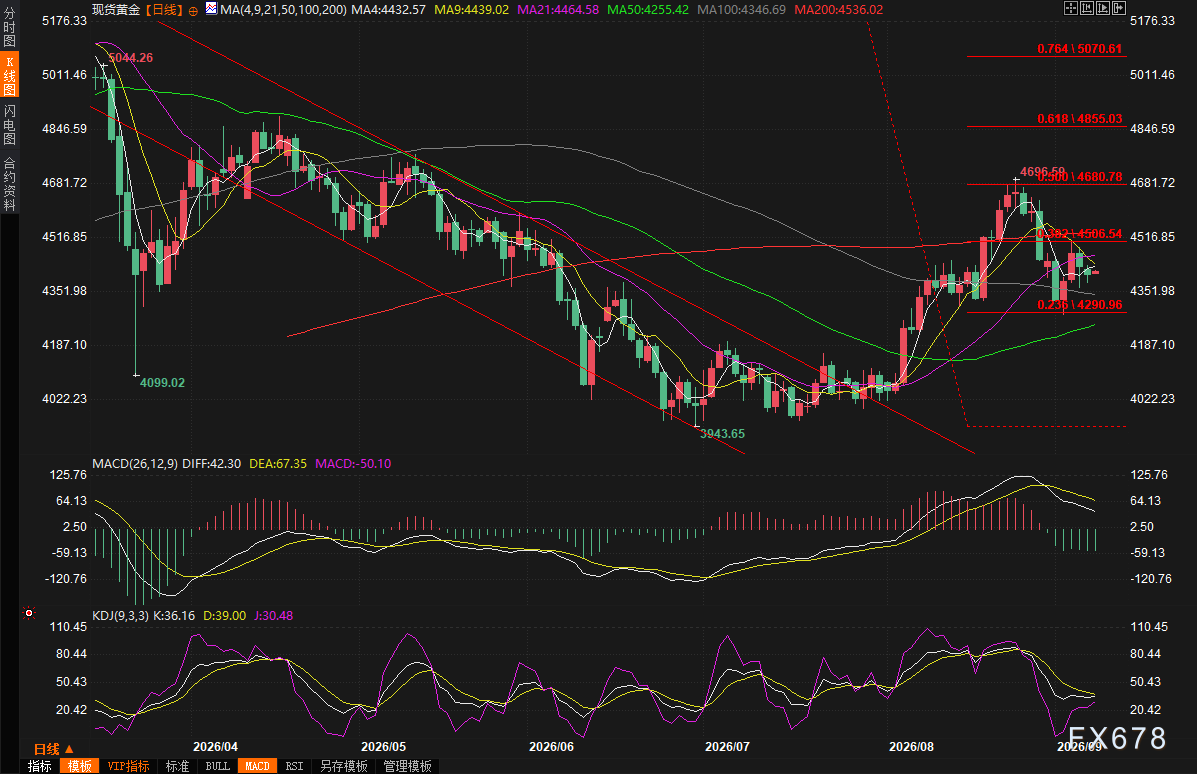
(Spot Gold Daily Chart, source: EasyForex)
GMT+8 07:38, spot gold last at $4,419.63/oz.
Disclaimer: The content of this article solely reflects the author's opinion and does not represent the platform in any capacity. This article is not intended to serve as a reference for making investment decisions.
You may also like
Solana records $348 million in RWA inflows, total tokenized assets reach $720 million
South Korea Prepares Large-Scale Securities Tokenization Market Reform
Fed Rate Hike Expectations Dominate Gold Prices, Bulls and Bears Battle at $4,400

From Wall Street to London! Amazon (AMZN.US) issues its first GBP bonds, using diversified financing needs to refute the AI bubble
Amazon has mandated banks for its inaugural GBP bond issuance, which could be launched as soon as Wednesday. Meanwhile, major global tech giants continue to raise funds to support the development of artificial intelligence.

Crypto prices
More


