(Kitco News) -The Treasury tripled its bond buybacks and yields rose anyway. The man who wrote End the Fed says he still wouldn't trust the accounting at Fort Knox
The US Treasury tried to calm the bond market on Wednesday, and the bond market declined the offer.
Treasury Secretary Scott Bessent tripled the ceiling on the government's purchases of its own long-dated debt to as much as $6 billion. A buyback is the government repurchasing bonds it already issued, meant to make them easier to trade and take pressure off what Washington pays to borrow.
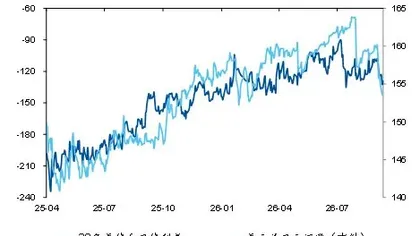
The announcement didn't calm anything. The 10-year yield rose about six hundredths of a percentage point to 4.85%, according to Bloomberg. Gold held its gains above $4,300.
Ron Paul has been describing a week like this one for fifty years, and his conclusion is the one he started with.
"I think that the people ought to own the gold, not the government," the former congressman told Kitco News. "And then we'd probably know more about it."
Fort Knox, and the question a tour can't answer
In August his son, Senator Rand Paul, spent about two hours inside the US Bullion Depository at Fort Knox and came out saying the gold is there. The US Mint puts the holding at roughly 147 million ounces, notes that members of Congress inspected the vault in 1974, and says it conducts regular audits. Critics say that is not an independent, bar-by-bar public accounting.
Paul's objection was never about the metal. It was about the books.
"I don't think anybody's going to know what's going on there, and they're not likely to," he said. "Sometimes you price it at $42 and sometimes you price it at $4,000, and then they claim the amount of gold is such and such. So no, I don't think that's trustworthy."
The Treasury still values the nation's gold at a statutory $42.22 an ounce. The figure dates to 1973 and has never been changed. Congress set it and it has sat there while the metal went up more than a hundredfold.
Paul does not forecast prices and didn't offer one. What he is arguing is narrower and older than a forecast: that the case for holding the metal yourself, rather than trusting somebody's accounting of it, has not changed in fifty years.
Asked what would make him sell his own, he quoted a friend in the coin business. "He says true gold bugs never sell. And no, I wouldn't."
He is equally unconvinced that revaluing gold would fix anything by itself. Imagining Washington repricing it at $7,000 and offering to redeem dollars for metal, he noted the British tried a version in the 1920s and it collapsed.
"I don't think it would last long," he said. "I think it would be consumed too fast, because you didn't change the system. You didn't change the idea of how to spend, and fighting the wars, and who owns the government."
Other governments keep accumulating regardless. According to the World Gold Council's latest survey of reserve managers, which Kitco reported in June, 89% expect global central bank gold holdings to rise over the next year and a record 45% expect their own institution to add.
Paul suspects the motive is not instructional. "I would suspect that their long-term plans are not to try to teach Americans to be more moral and ethical," he said.
The machine
On this week's intervention, Paul is not certain the program is what its name suggests.
"I just wonder whether this might not turn into QE number two," he said. "But you wonder, where are they getting all this cash?"
Quantitative easing was the post-2008 program under which the Federal Reserve created money to buy bonds. Officially it ended years ago.
What bothers him more is what the Fed has quietly stopped discussing. M1 and M2 are the Fed's own measures of money in circulation.
"We say, I wonder if M1 is growing anymore, I wonder if M2 is growing, I wonder what the supply of money is doing," he said. "They say that is an ancient way of looking at things. But there's a few of us who still think the total money supply might have a significance to it."
He expects the buying to escalate. "It eventually won't work and they'll have to do a lot more," he said, "because they will not be able to hide the shenanigans that go on in order to keep this machine of monetary embezzlement going.
Bessent, speaking in Texas about intervening in currency markets, recently said, "I am the house now." Paul read that as salesmanship. Putting words in the Secretary's mouth, he said the message amounts to: "It's all going to be okay, and I'm in the position to do it, and I'm smarter."
"Maybe that's over the top," Paul added. "Maybe I'm just in a bad mood. But I'm so cynical about how they run monetary policy."
When the referee buys a seat at the table
The genuinely new thing, Paul says, is ownership. He says the government has taken stakes in more than 30 private companies since 2025, and calls it corporatism, his word for a business that is private on paper and directed in practice.
"Now our government agencies and our executive branch, they buy stock in these companies," he said. "They're part owners of these companies."
He reached back to the railroads to make the point.
"Every one of those railroad companies that took the money and took the regulations, and they were fed money continuously, went bankrupt," Paul said. "And the one that would refuse, I don't want your money, was the one that survived."
The word he keeps hearing
Affordability has become the political vocabulary of the year. Paul thinks it describes the wrong thing.
"They always talk about, ‘that's not affordable, we can't afford the gasoline,’" he said. "But do they ever say, ‘let's turn it around. It isn't the affordability, it's the valuation of your money that is the problem.’"
The arithmetic is not theoretical. Brent crude has breached $100 a barrel for the first time since July and is up about 65% this year, according to Bloomberg. AAA has diesel at a record. The Mortgage Bankers Association put the 30-year mortgage at 6.85%, the highest in over a year.
Asked how a conflict in the Gulf reaches an American mortgage, Paul did not reach for a model. "Because it costs money," he said, "and nobody's going to buck it."
He called the present setup "probably the biggest bubble in the history of the world," and said the reckoning is not optional. "The debt and malinvestment, for the cleansing that a system like this has to have, is coming, and it has to be liquidated."
Where the argument started
Paul is 91, and none of this came from a book.
During the Second World War his father was trying to be helpful. His mother owned one last lot of land, her children were grown, and she was retired. Sell it, he told her. It's worth something.
She said no. Her relatives lived in Germany, and she remembered what had happened to their money.
"She was elderly. She probably never got through eighth grade," Paul said. "But she had an instinct that there was value in that land that may protect her if that came."
He was not yet ten. The family was Lutheran, a cousin was in a German prison camp, and the boy had started praying for people he had never met. He had also started doing the arithmetic that troubles children and embarrasses adults. Germany was a Christian nation. So was America. He asked his grandmother how that worked.
"She knew I was disturbed about the war going on, and I must have asked her, why does this happen? Why do they start these things?"
"I remember her so clearly. She says to me, she says, ‘Ronnie, the people don't start the wars. The governments do.’"
"And that stuck with me."
Everything since has been a version of that sentence with the numbers attached.
The second moment came on a Sunday night in August 1971, when Nixon ended the dollar's convertibility into gold and left the currency backed by nothing but confidence. Paul watched it live.
"He only talked for 15 minutes, and I was watching the television and I jumped up," he said. "What? And I knew it was a big deal." He phoned a doctor friend, "the only one in town that could have any idea what I was talking about."
Years later, the Austrian economist Ludwig von Mises came through Houston near the end of his life. Paul called the same friend. Both were in medical practice, both arranged coverage, and the two of them drove to the University of Houston for the lecture.
"He had a very, very strong German accent, and I had German in college," Paul said. "And I thought, oh boy, that's pretty good."
Then, after a pause: "I have to admit, couldn't understand a word."
He read the write-ups the next day.
Asked what he still wants to see, Paul did not name a policy. He made the case the way his grandmother did, with memory.
"Just think, for 42 years, we weren't even allowed to own gold," he said. Americans were barred from holding it by executive order in 1933, and Congress restored the right at the end of 1974. "Then all of a sudden we were allowed to own gold again, and now we're having states talking about legal tender."
"It's all educational. I want to continue to see the expansion of the education of what sound money and liberty is all about."