

Ripple, the San Francisco-based blockchain company known for developing the XRP Ledger and the digital asset XRP, unlocked 1 billion XRP tokens valued at approximately $1.38 billion on September 1. Market observers initially viewed this significant token movement as a potential bearish event for XRP.
Ripple unlocks 1 billion XRP, returns 700 million to escrow
By:Cointurk
Bitget offers one-stop trading for cryptocurrencies, stocks, and gold. Trade now!
A welcome pack worth 6200 USDT for new users! Sign up now!
Escrow system reduces immediate impact
The 1 billion XRP release was executed in three separate transactions, distributing 500 million, 400 million, and 100 million XRP. During the release, XRP traded near $1.38 and rose to about $1.42 within five days. However, the unlocking of tokens by Ripple does not necessarily translate into an equivalent amount of new XRP entering circulation.
Ripple implemented its escrow system to bring predictability to monthly token supplies. Each month, up to 1 billion XRP can be unlocked, but the company frequently re-escrows a portion of the unused tokens into new contracts.
Following the latest release, Ripple sent 700 million XRP straight back into escrow contracts. This action left 300 million XRP circulating outside the newly created escrows, but there is no indication these tokens immediately hit contemporary trading platforms.
The “1 billion XRP unlocked” headlines often exaggerate the potential market impact by implying an immediate, large-scale influx of supply. In reality, traders have become accustomed to Ripple’s regular monthly unlocks, as this practice has continued for several years without sudden disruptions to the XRP market.
Institutional investment activity
While supply dynamics remain in focus, institutional interest in XRP appears to have increased. On September 1, U.S.-listed spot XRP exchange-traded funds attracted $14.38 million in inflows, marking the eleventh consecutive session of positive movement. This contrasts with Bitcoin funds, which reportedly experienced net outflows over the same period.
U.S. spot XRP ETFs saw consistent inflows over eleven sessions, accumulating $14.38 million on September 1, whereas Bitcoin funds faced ongoing outflows, according to Coinpaper data.
Although the growing demand from ETFs is significant, it does not automatically offset the supply released from escrow each month. However, it introduces a new source of buying pressure that was absent in the earlier years of Ripple’s escrow system.
Developments in the XRP ecosystem
Recent activity in the XRP ecosystem continues to evolve. The XRP Ledger, the decentralized blockchain supporting XRP, recorded a 29% rise in AI-focused payment operations. Additionally, RippleX, Ripple’s development arm, has explored using XRP as collateral in institutional financial products.
Mini dictionary: RippleX — RippleX is the technology and developer platform of Ripple, focusing on building and fostering the XRP Ledger ecosystem and supporting new use cases for XRP.
Analysts maintain that the most critical factor is not the total monthly unlock, but how much of the released XRP is re-escrowed, how much remains with Ripple, where these tokens subsequently move, and whether exchange balances materially change.
Market implications
The activity in September clearly demonstrates this distinction: despite 1 billion XRP officially leaving escrow, only 300 million were retained outside, and the majority was re-escrowed. Observers expect the pattern to continue with the next monthly unlocking cycle.
For XRP’s price, the destination and usage of unlocked tokens carry much more relevance than the total figure reported each month.
0
0
Disclaimer: The content of this article solely reflects the author's opinion and does not represent the platform in any capacity. This article is not intended to serve as a reference for making investment decisions.
Understand the market, then trade.
Bitget offers one-stop trading for cryptocurrencies, stocks, and gold.
Trade now!
You may also like
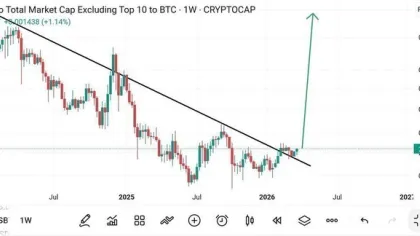
Altcoin Breakout Tests Long-Term Resistance
Cryptonewsland•2026/09/15 16:51
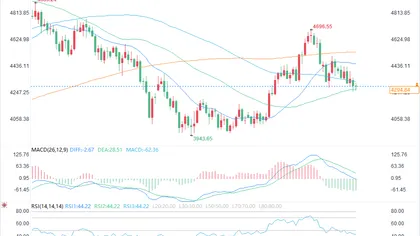
Dow Jones Industrial Average slides as yields beat the Fed to tomorrow's hike
FXStreet•2026/09/15 16:33
Meta (META.US) strengthens self-developed AI chips! Plans to deploy data centers in the first half of next year, aiming to reduce inference costs and energy consumption
Meta Platforms plans to deploy its next-generation self-developed artificial intelligence chips to data centers in the first half of 2027, aiming to reduce the energy consumption and costs required to run AI models through customized chips.
智通财经•2026/09/15 16:16

Crypto prices
More
Bitcoin
BTC
$76,353.93
-2.94%

Ethereum
ETH
$2,420.37
-4.11%

Tether USDt
USDT
$0.9994
-0.04%

BNB
BNB
$718.25
-0.74%

XRP
XRP
$1.38
-1.90%

USDC
USDC
$0.9999
-0.00%

Solana
SOL
$99.08
-3.24%

TRON
TRX
$0.3359
-1.53%

Hyperliquid
HYPE
$77.13
-4.44%

Zcash
ZEC
$1,120.03
-1.53%
How to buy BTC
Bitget lists BTC – Buy or sell BTC quickly on Bitget!
Trade now
Become a trader now?A welcome pack worth 6200 USDT for new users!
Sign up now