
Oil tops $100, Treasuries tag 5%, rate cuts are off the table. Warsh has three questions left tonight: hike 25, hold, or go more hawkish?
 2026/09/16 02:44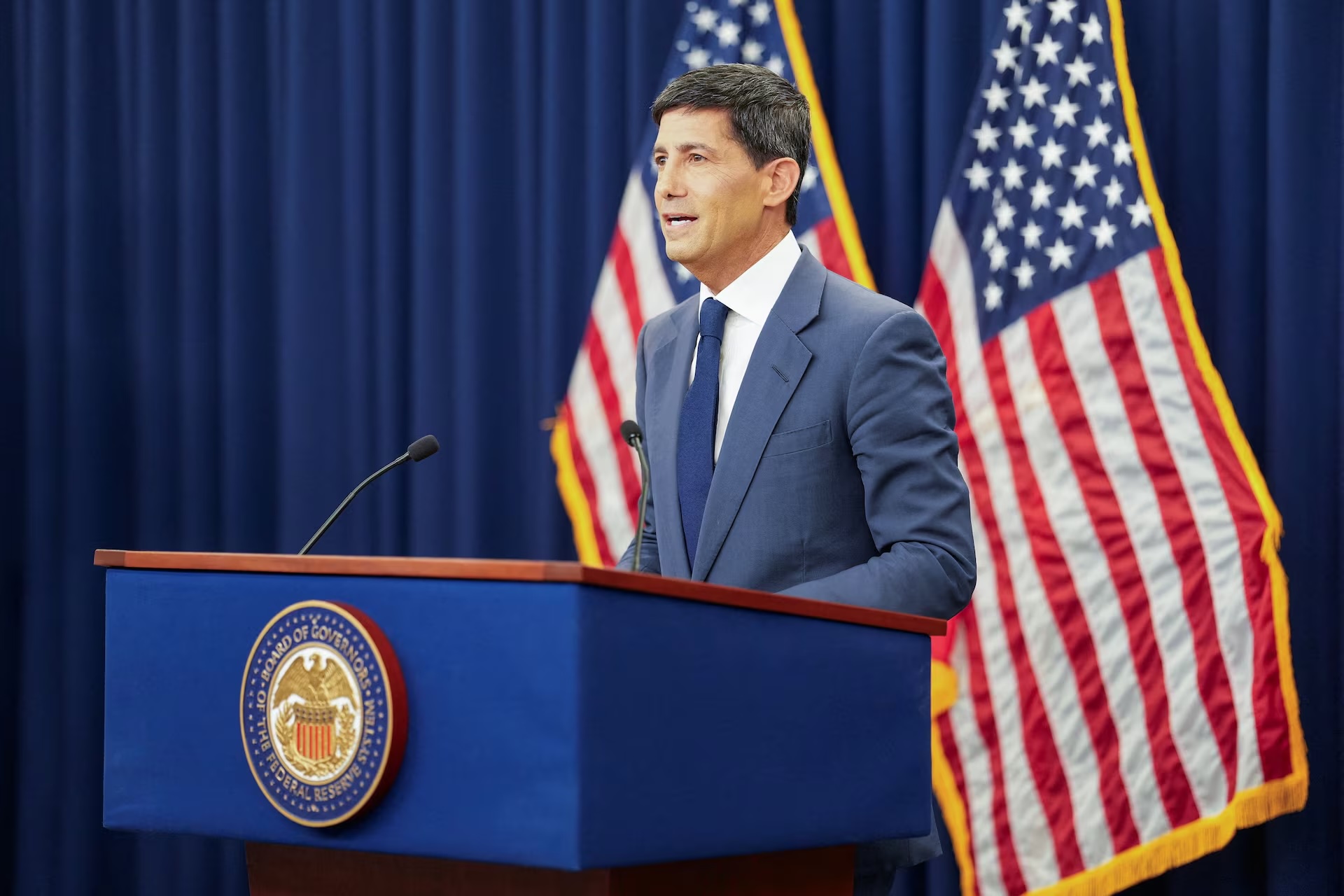
-
whether the vote is one-sided,
-
where the dots put the year-end rate,
-
how the statement talks about oil,
-
and whether Warsh talks tough at the podium.
-
A 25bp hike to 3.75%–4.00%, about 87%–90% odds. This is the base case.
-
A hold, about 10%–13% odds. That would be a dovish surprise.
-
A 50bp hike is under 2%. But a 25bp hike plus a sharply higher dot plot can still hit growth stocks. 25bp is mostly priced. What can actually reprice the tape is the dots and the press conference.
| Ticker | Sleeve | Why it fits |
| rXOM | Energy | Oil is above $100; the energy inflation premium is still there |
| rCVX | Energy | High-dividend cash machine; easier to trade than a single energy ETF |
| rJPM | Banks | Higher short rates feed large-bank net interest margin first |
| rGS | Investment banks | More volatility helps trading and deal flow |
| rRTX | Defense | Orders and geopolitics matter more than the multiple |
| Ticker | Sleeve | Why it fits |
| rNVDA | AI compute | Lower rates lift the multiple fastest |
| rTSLA | Growth | Long duration; most sensitive to rates moving down |
| rQQQ | Nasdaq ETF | One-ticket long on U.S. growth |
| rSOXL | 3x semiconductors | Chips already sold off Monday; bounce beta is high |
| rPLTR | AI software | High-multiple growth; first stop if money rotates back in |
| Ticker | Sleeve | Why it fits |
| rXOM | Energy | Cash cow; money leaving tech often lands here |
| rCVX | Energy | High yield, lower duration; holds up better in a hawkish tape |
| rSOXS | 3x inverse semis | Cleanest hedge if chip multiples get hit |
| rNEE | Utilities | Bond-like defense; relatively resilient in a rate scare |
| rPG | Staples | Steady earnings; less multiple damage than tech |
Stock Limited-time Offer:August new user gift: Buy U.S. stocks and get free NVIDIA stock.Trade Now for Better Deals
New to stock spot trading? These videos will get you up to speed:
"Understanding Bitget Spot Stock Trading"
"Spot Stock vs. Stock Perps vs. Traditional U.S. Stocks: Pros, Cons, Ownership & Leverage"
"How to Pick the Right Stock Tokens & ETFs on UEX? 2 Key Metrics to Help You Avoid Costly Mistakes"
Disclaimer: The content of this article solely reflects the author's opinion and does not represent the platform in any capacity. This article is not intended to serve as a reference for making investment decisions.
You may also like
US Treasury "Extreme Short Sellers" Gather! With Oil Prices and Treasury Yields "Dual Pressure," Rate Hike Expectations Surge, Market Bets Real Money on a New Round of Tightening
According to some veteran Wall Street analysts, the most favorable combination for the market is a small rate hike accompanied by a clear data-dependent stance, allowing investors to interpret it as a limited and moderate monetary policy adjustment to guard against recurring inflation.

Intel CEO: CPU only meets 50% of demand, 14A to start production in Q1 next year, new architecture may reduce inference power consumption to 1/15 of GPU
Intel CEO Pat Gelsinger stated that the era of AI agents has triggered an explosion in CPU demand, and Intel is currently able to meet only about 50% of its customers' supply needs, with several tech giant CEOs calling to secure supply. In terms of manufacturing process, the 18A node is now in full mass production, while the 14A node will begin production in the first quarter of next year. By opening up factory data, yield rates are improving by about 7% annually. Additionally, he is advancing neuromorphic computing to address energy consumption bottlenecks and expects quantum computing to have a substantial industrial impact within 3 to 5 years.
Reportedly, the US urges Japan to "increase" defense spending; Tokyo considers a 3.5% GDP target, bond market and yen come under pressure first
Under pressure from the United States, Japan is considering setting a new medium-term defense spending target, planning to increase its defense expenditure to 3.5% of GDP to align with NATO and other U.S. allies.

Crypto prices
More


