
India Originally Intended to Curb Gold Consumption, but Instead Boosted Black Market Cash Transactions

India's gold market is experiencing a shift that policymakers did not want to see: as official gold prices rise and taxes increase, more buyers are turning to cash transactions without invoices.
Bloomberg, citing multiple industry sources, reports that the price of some gold and jewelry transactions in India's off-market cash trades can be up to 6% lower than the formal market, prompting some bulk buyers to bypass official sales channels.
A 55-year-old housewife named Anuradha told Bloomberg that when she purchased gold jewelry for her daughter’s wedding, she received a discount of 5,000 rupees (about $52) per 10 grams but received no invoice.
Although gold prices have retreated from record highs earlier this year, they are still nearly 28% higher than a year ago, making these discounts even more attractive given the high absolute prices.
Tax Burden Drives up the Cost of Official Channels
Unofficial gold transactions are not a new phenomenon in India, but in the past there was insufficient price incentive. The gold import duty previously stood at 6%; later, the government raised the import tax on gold and silver to 15% to curb precious metals imports and ease the growing trade deficit. Retail consumers must also pay an additional 3% Goods and Services Tax (GST) when purchasing gold.
Outside the official channels, traders can evade certain taxes and pass on some of the savings to buyers in the form of discounts. Industry insiders say that gold in the cash market is currently priced up to $200 per ounce lower than the benchmark price in the domestic market, while officially imported gold in September averaged only about $50 per ounce below the taxed landed cost.
Hiren Chandaria, Managing Director of Middle East and Asia business for London precious metals trading company Monetary Metals, noted that the large price difference in the unofficial market mainly reflects the economics of unofficial supply channels; higher import taxes have increased the incentive for gold to enter the market informally.
For retail consumers, the price gap is also sufficiently clear. According to industry sources, some consumers can receive discounts of up to 10,000 rupees per 10 grams of gold by bargaining with jewelers and relying on longstanding trading relationships.
The Indian Government Attempts to Curb Imports But Stimulates the Cash Market
Gold is India’s second-largest import commodity after oil and a major source of the trade deficit. In July, India's trade deficit expanded to nearly $32 billion, the highest level so far this year. Over the past four months, the gold import bill has grown more than 32% year on year, prompting Prime Minister Narendra Modi to urge the public to reduce gold purchases for the second time in five months in order to save foreign exchange reserves.
But the coexistence of rising prices and high taxes has made the policy's effects mixed. In August, India's gold imports fell to less than half of the same period last year, indicating that official import demand has indeed been curbed. At the same time, informal cash trades are regaining momentum, and some demand is shifting to alternatives with lower tax burdens.
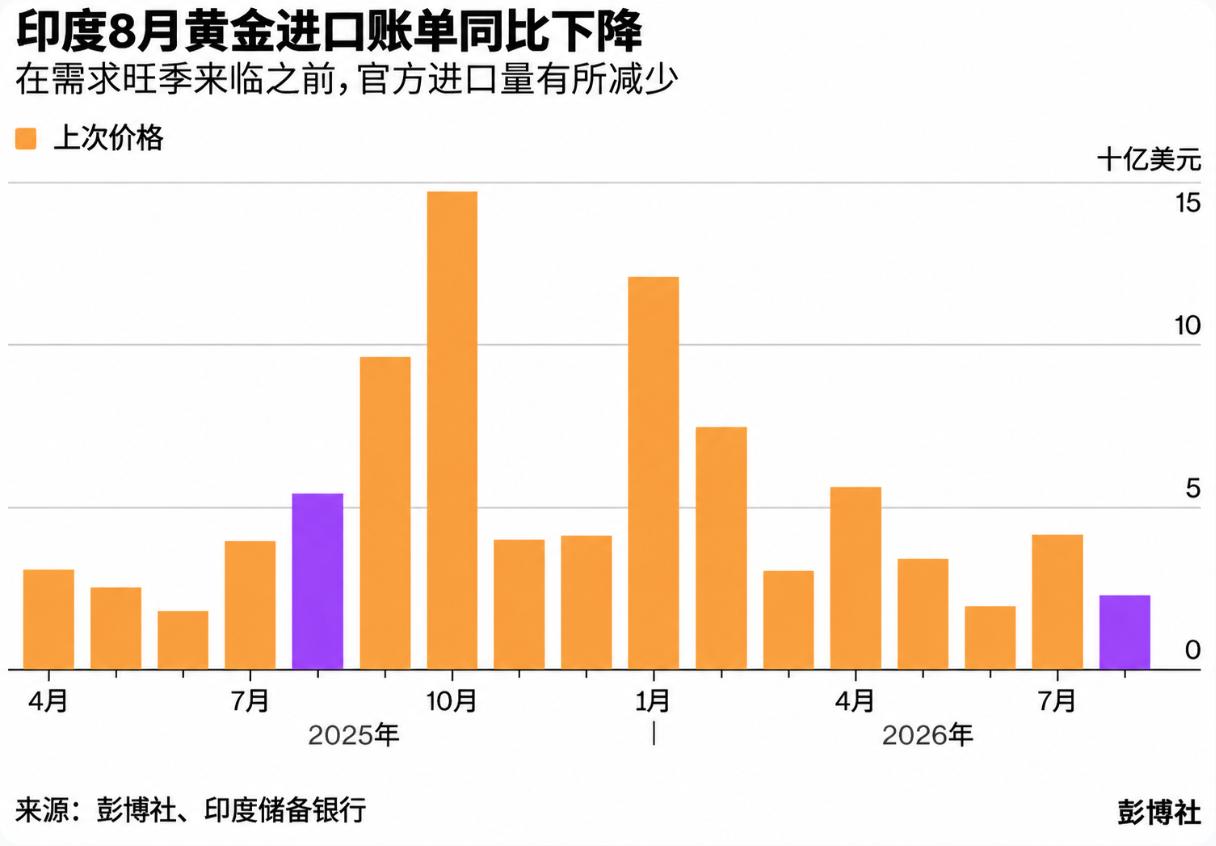
This shift is especially influenced by the structure of gold consumption in India. India is the world's second-largest gold consumer; gold is not only used for jewelry, but also as gifts and household savings. Weddings, festivals, and major life events continually generate stable demand. As the wedding and festival buying season begins in mid-October and continues through to the following March, cash gold transactions are expected to remain robust.
Although gold prices have retreated from their peak this year, prices remain high. In this market environment, even discounts of just a few percentage points mean significant rupee savings for Indian consumers, further reinforcing the incentive to avoid formal taxes and fees.
The Indian government originally hoped to reduce gold demand and shrink the trade deficit by raising import taxes, but the widening gap between official and cash market prices is creating new arbitrage opportunities. As gold itself becomes more expensive, every price gap created by taxes makes it even easier to push consumers toward opaque trading channels.
Disclaimer: The content of this article solely reflects the author's opinion and does not represent the platform in any capacity. This article is not intended to serve as a reference for making investment decisions.
You may also like
Why is Hedera price up over 20% today?

"The Big Short" Burry Targets Nvidia (NVDA.US) Again: Criticizes Jensen Huang for Resembling Palantir CEO Karp, $150 Billion Buyback Raises Doubts
Michael Burry, a well-known skeptic of Nvidia (NVDA.US) and the broader AI infrastructure boom, has once again criticized the chip manufacturer, comparing CEO Jensen Huang to Palantir CEO Alex Karp.
Meme Coin Digest for September 29: $35 Billion Market Faces Major Reality Check

Novo Nordisk stock is oversold, but is the 70% collapse from its peak over?

Crypto prices
More


