

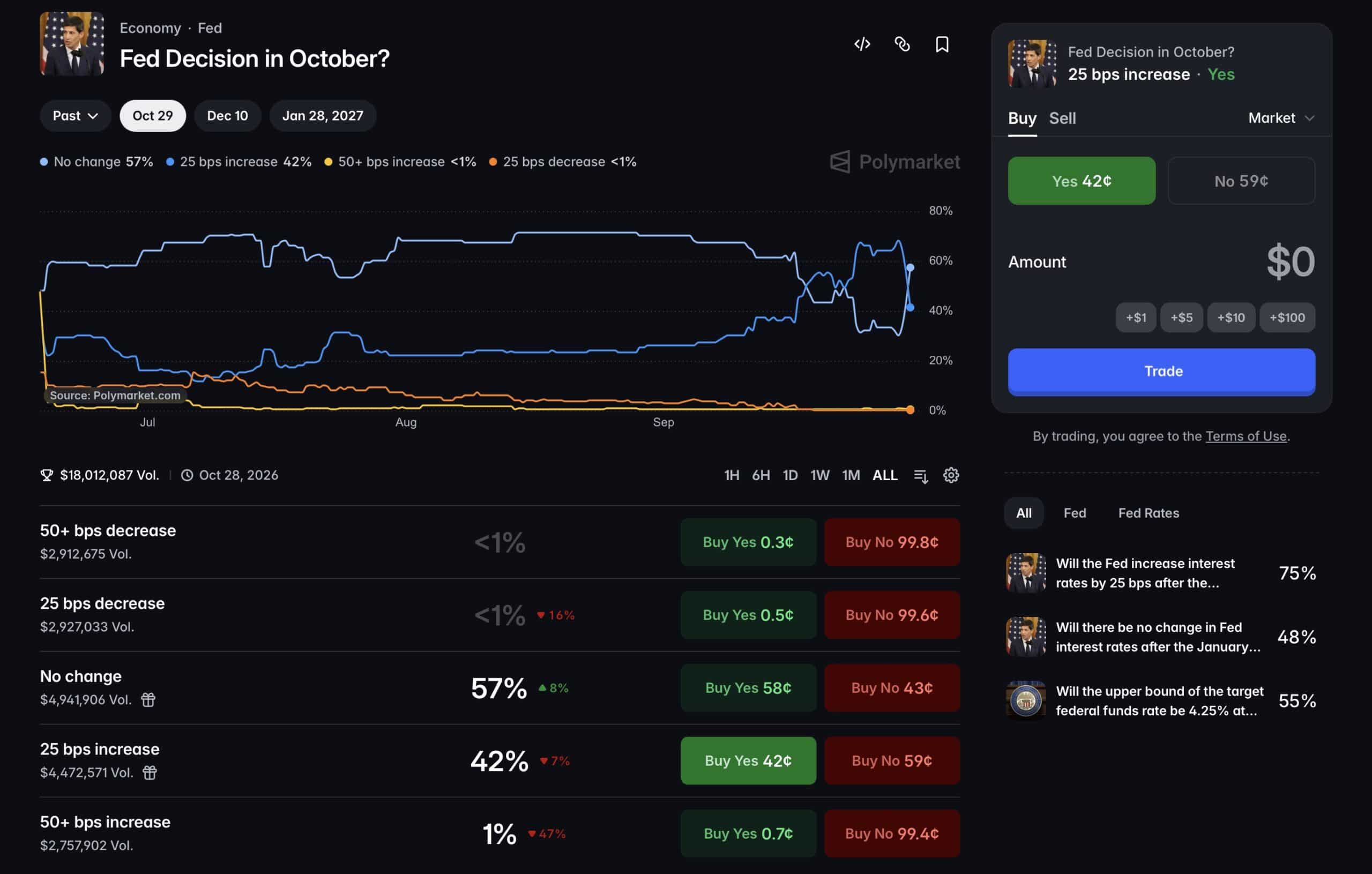
October rate Polymarket odds have flipped. On September 27, traders priced a 64% chance of a 25-basis-point hike at the Federal Reserve’s October 27–28 meeting. By September 30, the same Polymarket contract showed the reverse: no change at 57% and a 25-basis-point hike at 42%.
That shift matters for Bitcoin. Earlier, right after the Fed’s September 16 decision, Charles Schwab reported that CME FedWatch put the chance of an October hike at 49%. The new Polymarket reading shows how quickly rate expectations can swing, and why no single snapshot tells the full story.
The Fed’s September 16 hike set its target range at 3.75%–4.00%. Even with the latest repricing, neither outcome in October is locked in.
Rate expectations can hit Bitcoin through several channels at once. Broader rate-hike odds in prediction markets can also swing quickly as data and Fed comments change traders’ views.
Fed Decision in October Polymarket
Bitcoin and Fed Rates: What Do the Latest October Rate Polymarket Odds Show?
Higher rates make cash and government bonds more attractive than speculative assets. They also raise borrowing costs and reduce the liquidity flowing into riskier investments.
Bitcoin is a macro-sensitive risk asset. It tied the market’s rate worries to the risk of tighter financial conditions.
The Polymarket contract on the Fed’s October decision has drawn about $18 million in volume. It now prices:
- No change: 57%
- 25-basis-point hike: 42%
- 50+ basis-point hike: about 1%
- Any rate cut: under 1%
For most of the summer, a hike led this market, often above 60%. The lines crossed several times in September before no change took the lead. A separate, smaller Polymarket contract shows the same shift, with no change, jumping from about 27% to over 60% on September 30.
The earlier hike odds reflected resilient U.S. growth, sticky inflation, and comments from Fed Governor Michael Barr. Barr suggested further tightening might be needed to bring inflation back to the Fed’s 2% target.
The 10-year Treasury yield hit 5.116%, its highest since July 2007.
Bitcoin and Ethereum: Resilience Amid Higher Treasury Yields
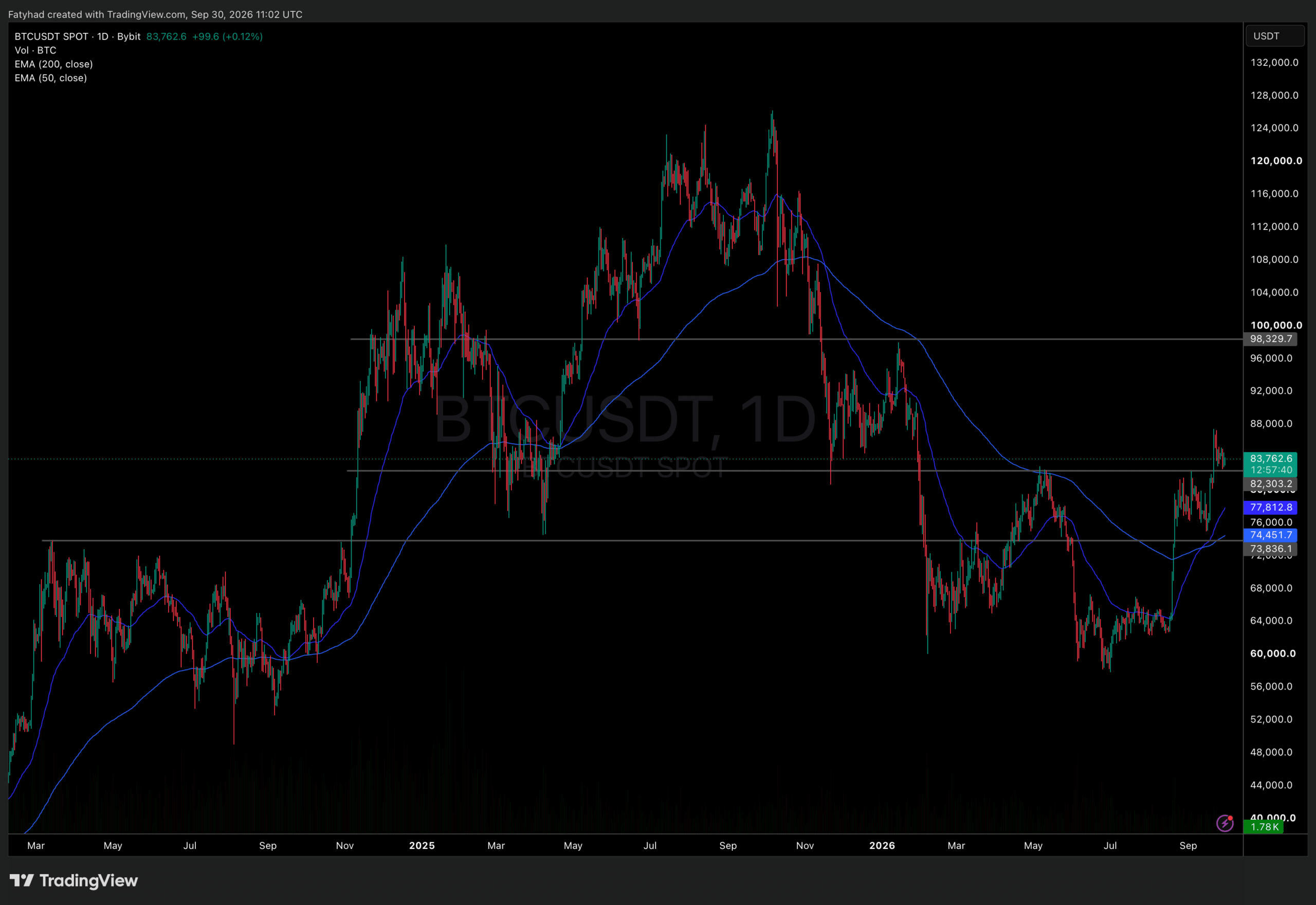
Bitcoin’s price history in the primary report complicates any simple claim that a hike automatically weakens crypto. BTC climbed above $86,000 earlier in September, even though the Fed raised rates. Stronger exchange-traded fund flows, better regulatory sentiment and short covering acted as supports.
 A physical representation of a Bitcoin coin.
The broader relationship between Treasury yields and Bitcoin’s macro resilience is therefore more informative than any one odds print. The rate outlook can weigh on risk assets while ETF demand or positioning provides a counterforce; those influences can coexist without producing a mechanically predictable price response.
October Rate Hike: What Bitcoin Traders Should Track
BTCUSDT Price Chart 1D TradingView
A resilience scenario might occur if hike probabilities remain under 50% or fall in similar market indicators. This continues while the main report’s supports, ETF flows, regulatory sentiment, and short covering, remain in place. A renewed pressure scenario would involve hawkish Fed communication, stronger inflation or growth data, rising Treasury yields, and hike odds moving toward or above the September 30 Polymarket snapshot.
The next assessment should compare the same contract type at clearly stated timestamps, rather than framing Polymarket and CME FedWatch as a continuous series.
Official Fed communication, Treasury yields, and Bitcoin’s ability to absorb tighter liquidity expectations remain the key variables. The analytical question is no longer whether one 42% figure predicts the October decision; it is whether tightening expectations are becoming a durable constraint on risk appetite.


