
Bitcoin bear market will bottom when two-month RSI metric hits zero, trader predicts

Bitcoin (BTC) should repeat history and put in a bear-market bottom when a classic indicator hits zero, a trader says.
Key points:
- Bitcoin classic two-month stochastic RSI signals are valid this bear market, Max Crypto believes.
- The bear market will be over once the indicator reaches zero again.
- RSI divergences provided advance notice of the BTC price rebound beyond $64,000 this month.
Bitcoin stoch RSI bottom signal "will happen again"
In an X post at the weekend, Max Crypto went on record to forecast the end of the 2026 bear market when the stochastic relative strength index (RSI) hits a new swing low.
Stoch RSI is a derivative of RSI, a popular leading indicator, with a greater bias on recent price moves.
“Every time the 2M Stoch RSI had a bullish cross and dropped to 0, $BTC bottomed,” Max Crypto wrote in accompanying commentary.
“This happened in 2014, 2018, and 2022, and it will happen again.”
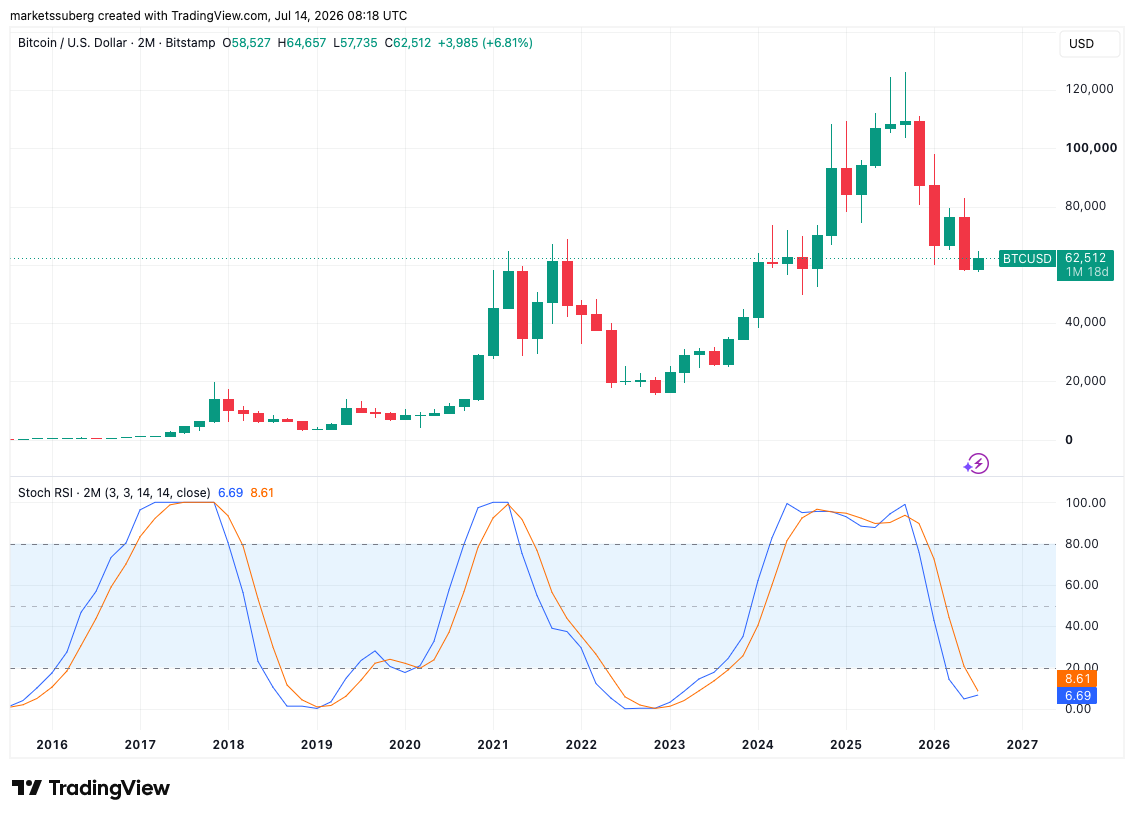
BTC/USD two-month chart with stochastic RSI data. Source: Cointelegraph/TradingView
Two-month stoch RSI measures 4.81, having dropped into its sub-30 “oversold” zone during March, data from TradingView confirms. Current levels were last observed just over three years ago.
Stoch RSI has already formed a focus for market participants this year, with daily moves previously drawing comparisons to the 2022 bear market.
In April, crypto trader Quantum Ascend described BTC price history as “playing out nearly perfectly.”
Bear-market RSI cues keep coming
Turning to traditional RSI data, traders continue to look for bullish cues as BTC/USD treads water above $60,000.
Related: BTC price bull market to begin in September? Five things to know in Bitcoin this week
On Sunday, trader and investor BitcoinHyper eyed a bullish divergence against the S&P 500.
At the start of June, daily RSI dropped to just 15, marking one out of just six of what trader Osemka later called “extremely powerful selling events.”
“There's been one case where extreme $BTC RSI (1D at 15) failed to break the lows and only managed to sweep it. That was at the end of accumulation range in 2015,” he continued on Tuesday.
“I'm mentioning it now since we have also only swept the low on such powerful move down.”
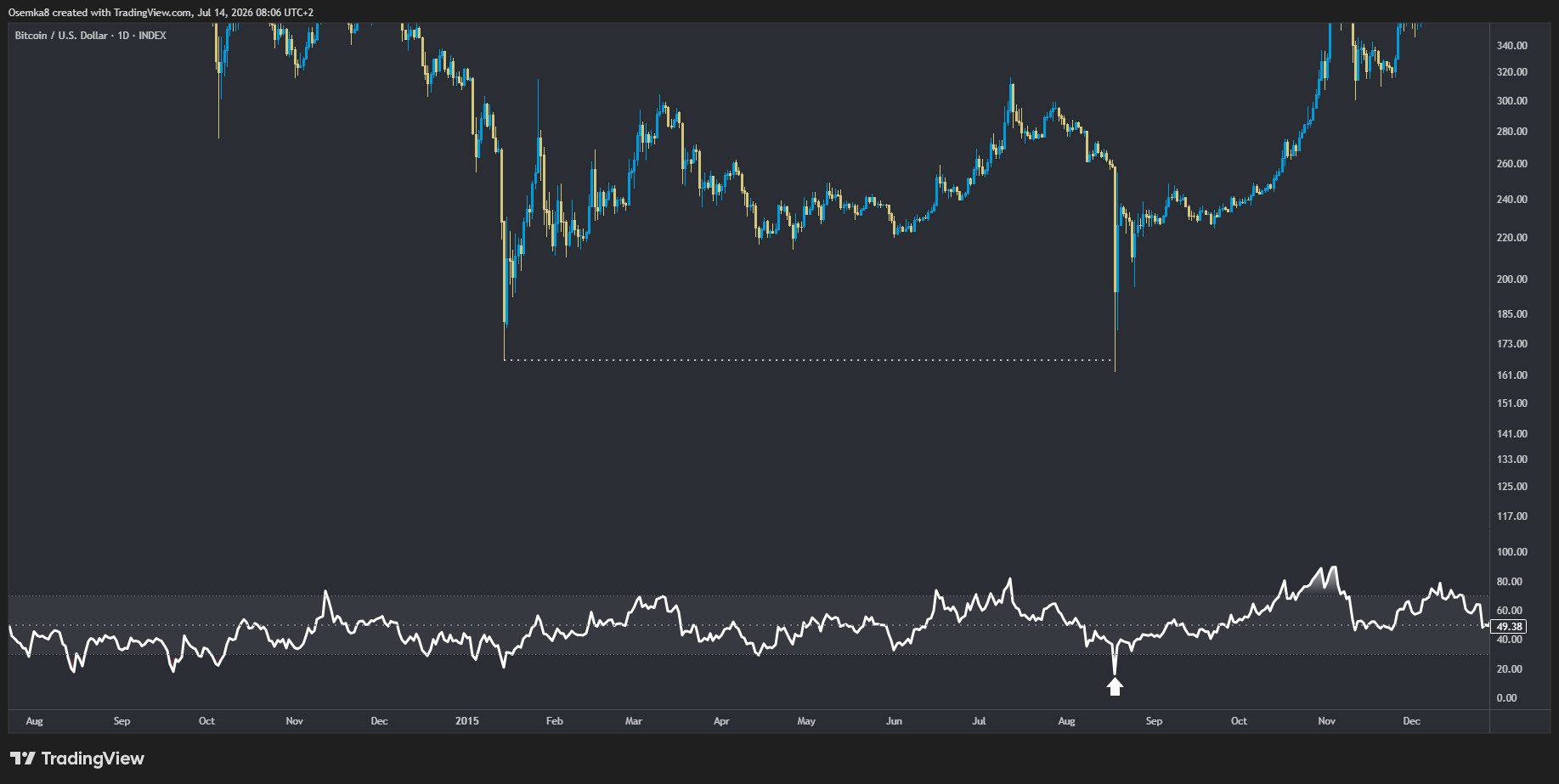
BTC/USD one-day chart with RSI data. Source: Osemka/X
Osemka implied that a deeper RSI retracement could still emerge, marking a price reversal in-line with previous bear markets.
Bitcoin’s return above $64,000 this month, meanwhile, came after bullish RSI divergences across multiple time frames.
Disclaimer: The content of this article solely reflects the author's opinion and does not represent the platform in any capacity. This article is not intended to serve as a reference for making investment decisions.
You may also like

Australian Dollar declines to near 0.7150 as hot US inflation data boost case for Fed rate hike
The AI super bull market still has room for imagination, but Wall Street has quietly prepared "two types of insurance": to guard against slow declines eroding returns, as well as to protect from sudden crashes.
Due to rising interest rates and oil prices causing the stock market rally to stall, investors are divided—some worry about a rapid sell-off, while others are concerned about a slow market decline. Some traders have become more creative with bearish strategies, such as buying put options on the Chicago Board Options Exchange Volatility Index or the S&P 500, or using double binary options to bet on a gradual price drop.

Sui trades near $0.72 as TD Sequential flashes buy signal, support zone in focus
Crypto prices
More


