
CleanSpark shares jump 22% after $6.6B Georgia data center lease

Shares of CleanSpark surged as much as 22% on Tuesday after the Bitcoin miner announced a 20-year data center lease in Georgia, reflecting its ongoing expansion into digital infrastructure beyond cryptocurrency mining.
CleanSpark said it signed a 20-year triple-net lease with an undisclosed investment-grade global technology company for a 175-megawatt data center at its Sandersville, Georgia, campus. The company estimates the deal will generate approximately $6.6 billion in contracted revenue over the initial term, increasing to $11.6 billion if the tenant exercises two five-year extension options.
Under the agreement, the tenant will install computing infrastructure at the site, with phased deliveries expected to begin in the fourth quarter of 2027.
The agreement is the latest sign of CleanSpark’s push to diversify beyond its core Bitcoin mining business and capitalize on growing demand for AI and high-performance computing infrastructure. Despite the shift, CleanSpark remains one of the largest publicly traded Bitcoin holders.
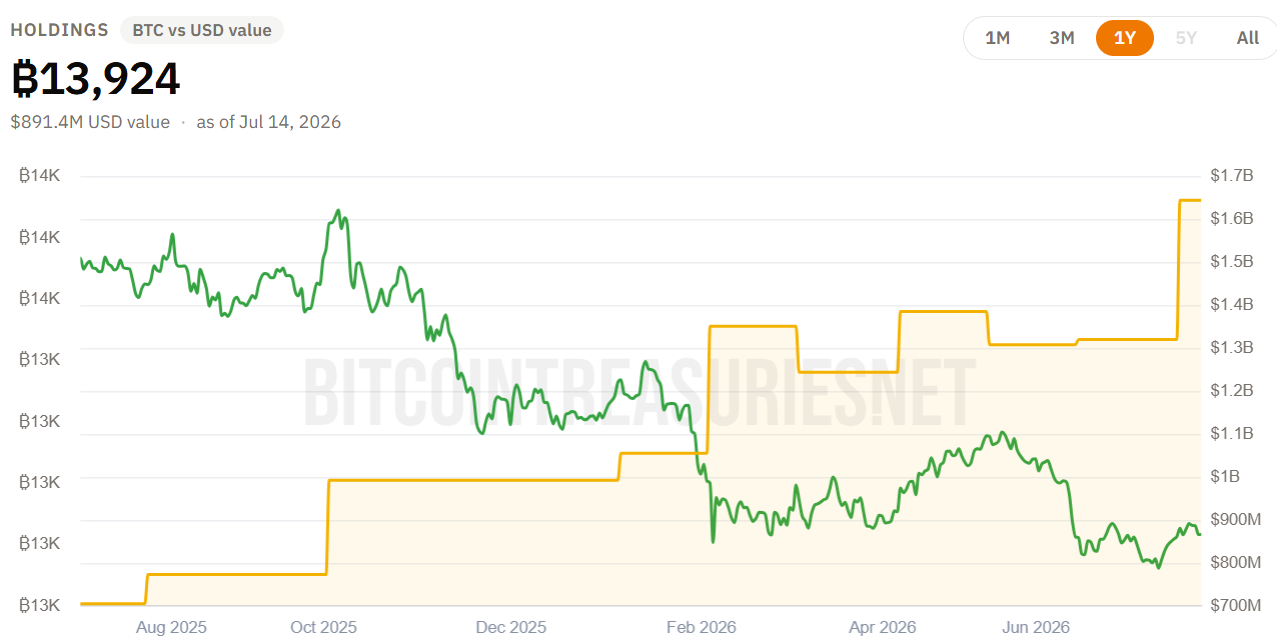
CleanSpark has gradually accumulated Bitcoin over the past year. Source: BitcoinTreasuries.NET
CleanSpark (CLSK) shares reached an intraday high of $15.10, before trimming some gains going in the US lunch hour. The stock was recently up about 11%, compared with a gain of less than 1% for the sector-tracking CoinShares Bitcoin Miners ETF (WGMI).
Related: Crypto Biz: Bitcoin maximalism meets the realities of capital markets
Bitcoin miners seek new revenue streams
CleanSpark’s expansion comes as Bitcoin miners face mounting pressure from weaker mining economics, including lower revenues and tighter profit margins following the 2024 halving. In March, the company reported a fiscal second-quarter net loss of $378 million, with nearly 60% of the loss attributed to a decline in Bitcoin’s price.
In February, the company sold a portion of its BTC holdings to help fund operations and growth initiatives.
The company has fared better than many of its peers, however. While several miners have sold significant portions of their Bitcoin reserves to shore up liquidity, CleanSpark has remained a net accumulator. As Cointelegraph reported, publicly traded miners sold roughly 15,000 BTC between October and the end of February.
It is expected to report fiscal Q3 results on Aug. 6, with analyst consensus for a loss of $0.25 per share compared to earnings of $0.79 in the comparable quarter last year, according to Yahoo Finance. It has missed Wall Street estimates in the last three consecutive quarters.
Related: CoreWeave shows how crypto-era infrastructure quietly became AI’s backbone
Disclaimer: The content of this article solely reflects the author's opinion and does not represent the platform in any capacity. This article is not intended to serve as a reference for making investment decisions.
You may also like
Australian Dollar declines to near 0.7150 as hot US inflation data boost case for Fed rate hike
The AI super bull market still has room for imagination, but Wall Street has quietly prepared "two types of insurance": to guard against slow declines eroding returns, as well as to protect from sudden crashes.
Due to rising interest rates and oil prices causing the stock market rally to stall, investors are divided—some worry about a rapid sell-off, while others are concerned about a slow market decline. Some traders have become more creative with bearish strategies, such as buying put options on the Chicago Board Options Exchange Volatility Index or the S&P 500, or using double binary options to bet on a gradual price drop.

Sui trades near $0.72 as TD Sequential flashes buy signal, support zone in focus

Crypto prices
More


