The cancellation of a planned U.S. military strike against Iran on Thursday has shifted geopolitical risk calculations overnight, creating fresh crosswinds for crypto traders who have been tracking Middle East instability as a potential volatility trigger. U.S. President Donald Trump said he had canceled the strikes after negotiations were elevated to Iran’s top leadership and approved by a broad coalition including the United States, Israel, Saudi Arabia, the UAE, Qatar, Turkey, Pakistan, Bahrain, Kuwait, Jordan, Egypt, and others, according to the original report. The framework and final points of the negotiations have been approved, Trump stated, but the naval blockade on Iran will remain in effect until the deal is finalized.
The Deal Framework and What’s at Stake
The broad coalition backing the framework underscores the diplomatic effort to de‑escalate one of the most persistent geopolitical flashpoints. Yet the blockade’s continuation means the situation remains far from settled. For now, the immediate threat of a military confrontation has been removed, but the absence of a signing date and location leaves traders searching for confirmation that the détente will hold. That uncertainty is reflected in energy markets and could spill into risk assets, including cryptocurrencies that have historically reacted to Middle East turmoil.
Naval blockades in the region have previously disrupted oil tanker routes and threatened supply lines through the Strait of Hormuz, a chokepoint that carries roughly a fifth of global petroleum consumption. During past escalations, Bitcoin occasionally spiked alongside gold as a hedge against supply‑shock fears and broader market instability. The removal of a direct strike, therefore, pulls away a near‑term tail risk that some traders had priced into $BTC options markets.
Geopolitical Risk and Crypto: A Reset for Safe‑Haven Demand?
Crypto markets have danced to the tune of geopolitical headlines throughout the year. Escalating tensions in the Middle East have often sent short‑term safe‑haven flows into Bitcoin and stablecoins, while calming signals tend to redirect liquidity toward high‑beta altcoins and DeFi tokens. Thursday’s announcement could mark a short‑lived unwind of that risk premium, but the blockade keeps a floor under uncertainty. Traders are likely to treat any follow‑up delays or breakdowns in the deal as a potential catalyst for renewed volatility.
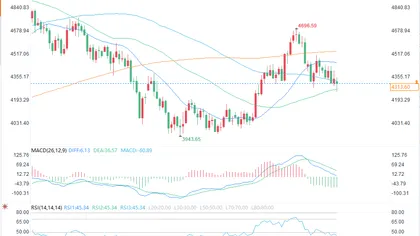
The nuance for Bitcoin is that its safe‑haven narrative has been patchy. While it has occasionally risen during periods of acute geopolitical stress, it has also tracked risk‑on assets when macro liquidity conditions are favorable. With crude oil prices already reflecting some of the Iran premium, a full de‑escalation could undercut one pillar of the recent sideways trading range in $BTC. Conversely, if the deal falters, the sudden reintroduction of military risk would likely trigger a scramble into perceived safety, possibly sending Bitcoin above the $90,000 level that has capped recent attempts.
Broader Market Currents: Regulation and Institutional Activity
Crypto markets were already navigating a thicket of regulatory uncertainty before Thursday’s news. As reported by BlockchainReporter, the U.S. banking lobby is pushing last‑minute amendments to a landmark crypto bill days before a Senate vote, threatening to derail what could be the most significant legislative pivot for digital assets in years. That domestic policy drama alone has kept institutional risk managers on edge, and the interweaving of geopolitical and regulatory uncertainties creates a messy backdrop for positioning.
Meanwhile, on‑chain activity and institutional adoption have continued apace. Real‑world asset tokenization vaulted past $20 billion this week, highlighting how traditional finance players are forging ahead regardless of short‑term macro noise. And altcoin markets have not been standing still: tokens like $TON and $SIREN recorded sharp weekly gains, as captured in BlockchainReporter’s top gainers roundup. That dispersion suggests that while macro headlines dictate the broad risk‑on/risk‑off pulse, asset‑specific catalysts remain the primary driver of crypto returns.
The open question for traders is whether a formal Iran deal will be sufficient to shift the macro regime. With a signing date yet to be announced and the blockade serving as a pressure lever, the pathway from framework to finalization is riddled with potential setbacks. In the meantime, crypto markets are likely to oscillate between risk‑off caution and a rotation into de‑escalation trades. The next few weeks could test whether Bitcoin’s correlation with equity markets tightens or if it retains an independent sensitivity to tail risks emanating from the Strait of Hormuz.